
Concrete Pool Decks
Create a beautiful, safe pool surround that handles water, sun, and heavy use while looking great for years.
Why Concrete Makes Sense for Pool Decks
Your pool deck takes serious abuse. Constant exposure to water, pool chemicals, bare feet, and hot sun would destroy many materials. Concrete handles all of this without falling apart. It doesn't splinter like wood, rust like metal, or fade and crack like cheap pavers. A properly installed concrete pool deck maintains its appearance and function for decades with basic maintenance.
Safety is critical around pools. Smooth surfaces become dangerously slippery when wet. Concrete can be finished with textures that provide excellent traction even when soaked. Unlike some materials that get unbearably hot in direct sun, concrete can be treated or colored to stay cooler underfoot. The surface remains stable and level, preventing trips and falls that are especially dangerous near water.
Design flexibility sets concrete apart from other pool deck materials. You can create any shape to fit your pool perfectly, from simple rectangles to freeform designs that follow organic pool shapes. Color options, textures, and decorative treatments let you match your home's style or create a resort-like atmosphere. We design pool decks throughout Braintree that combine safety, durability, and beauty to enhance the entire pool experience.
Design Options and Surface Treatments
The finish you choose affects safety, comfort, and appearance. Pool decks need slip-resistant surfaces, but you have many options that meet this requirement while looking great. Your choice depends on your budget, style preferences, and how you plan to use the space around your pool.
Textured and Broomed Finishes
A broom finish is the most economical option and provides good slip resistance. We drag a broom across the fresh concrete to create fine lines that grip bare feet. The texture can be light for a smoother feel or heavier for maximum traction. Brushed finishes create similar effects with different patterns. These simple finishes work well functionally but don't offer much decorative appeal beyond basic concrete appearance.
Stamped and Decorative Concrete
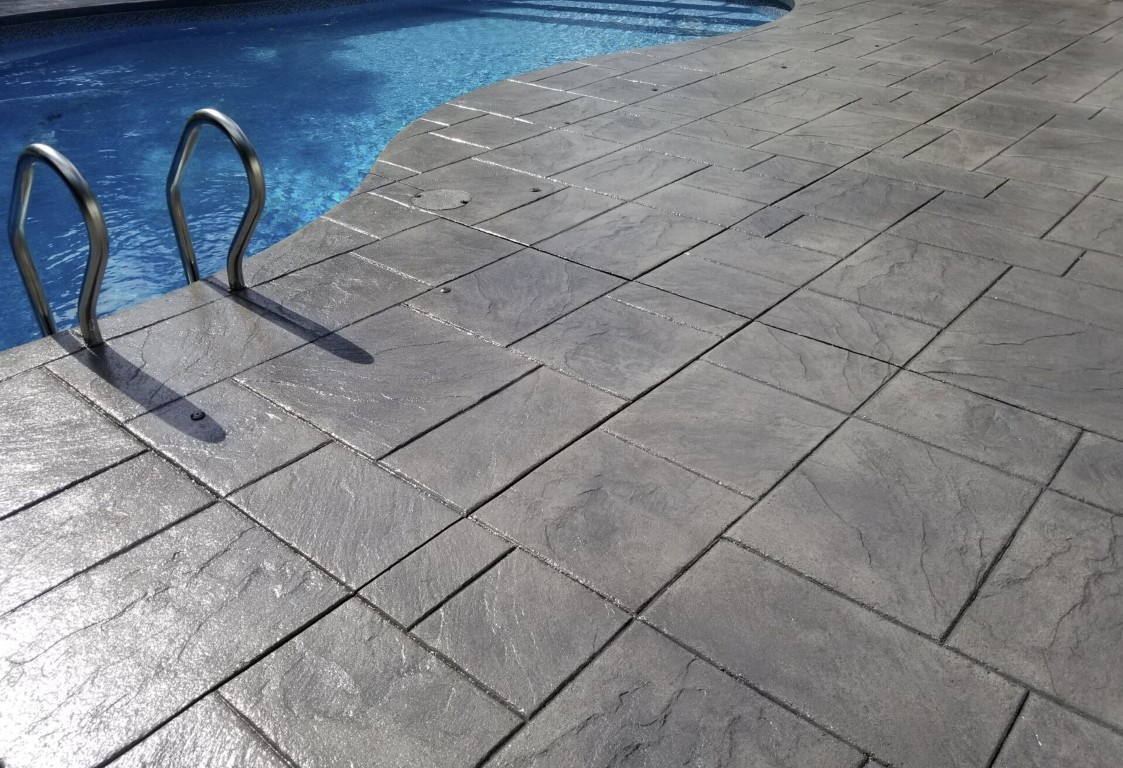
Stamped concrete transforms your pool deck into something special. We can create the look of natural stone, slate, brick, or tile at a fraction of the cost. The stamping process adds texture for slip resistance while creating beautiful patterns. Combined with integral color or stains, stamped pool decks deliver high-end aesthetics with concrete's practical benefits. This option costs more than basic finishes but significantly less than the materials it imitates.
Exposed Aggregate and Salt Finish
Exposed aggregate reveals the stones in the concrete mix, creating a natural, textured surface with excellent traction. This finish feels good on bare feet and provides a slip-resistant surface without being rough. Salt finish creates a similar effect with finer texture by pressing rock salt into fresh concrete then washing it out after curing. Both options offer distinctive looks that work especially well around pools.
Cool Deck and Specialty Coatings
Special concrete mixes and coatings reflect heat rather than absorbing it, keeping surfaces cooler in direct sun. This matters in New England summers when dark concrete can become uncomfortable to walk on. Cool deck products and acrylic coatings also provide color options and improve slip resistance. These systems cost more but deliver real comfort benefits for heavily used pool areas.
Pool Deck Features
- Built-in planters adding greenery and defining spaces
- Integrated seating walls providing convenient places to rest
- Decorative borders separating pool deck from surrounding areas
- Drainage channels directing water away from pool and structures
- Non-slip surfaces around pool edges for maximum safety
Installation Requirements and Considerations
Pool deck installation requires special attention to several factors. The deck needs to slope away from the pool slightly for drainage. Water should run off toward appropriate drainage areas, not back into the pool or toward buildings. We typically create slopes of about one-quarter inch per foot, enough to move water without being noticeable when walking. Proper drainage prevents standing water that becomes slippery and breeds mosquitoes.
The pool itself creates unique challenges. The deck must be isolated from the pool structure with expansion joints. This allows the concrete deck to move independently from the pool, preventing cracks as materials expand and contract with temperature changes. We place joints strategically so they control cracking and create clean visual lines rather than random breaks. The deck also needs adequate clearance around pool coping and equipment.
Base preparation follows the same principles as other concrete patio work but with extra attention to compaction and drainage. Pool decks get saturated frequently, so the base must drain well and stay stable when wet. We use several inches of compacted gravel that won't shift or settle. For problem soils, additional drainage systems might be necessary to move water away effectively.
Thickness and reinforcement depend on deck size and expected use. Standard pool decks are typically 4 inches thick with wire mesh or fiber reinforcement. Larger decks or areas where you might place heavy furniture need thicker concrete or additional reinforcement. We calculate proper specifications based on your specific situation to ensure your deck performs well long-term without cracking or settling.
Maintenance and Care
Pool decks need regular cleaning because they accumulate dirt, sunscreen residue, and pool chemicals. Sweep or hose off the deck weekly during pool season. A few times each summer, wash it thoroughly with a concrete cleaner or mild detergent and a stiff brush. This removes buildup that can make surfaces slippery and prevents staining from setting in. For stubborn stains from rust, leaves, or other sources, specialized concrete cleaners work better than household products.
Sealing protects your pool deck from water damage, staining, and surface deterioration. Apply a quality concrete sealer designed for pool decks every two to three years. The sealer needs to allow moisture to escape from below while preventing water absorption from above. For decorative finishes like stamped or colored concrete, sealing maintains appearance and protects the decorative treatments. The sealer also makes the deck easier to clean and helps prevent pool chemicals from etching or discoloring the concrete.
Monitor for cracks, settling, or surface damage. Small cracks can be filled to prevent water infiltration and widening. Larger cracks or settlement issues need professional assessment to determine the cause. Sometimes tree roots, soil erosion, or base problems cause deck settling. Addressing these issues early prevents bigger problems and maintains safety around your pool. Also check that drainage continues working properly and water isn't pooling where it shouldn't.
Winter care in Braintree includes protecting your deck from ice damage. While you don't need to worry about foot traffic when the pool is closed, ice formation can still cause problems. Avoid using harsh deicing chemicals on pool decks. These can damage concrete surfaces and contaminate your pool when they run off. If you need to clear ice, use plastic shovels rather than metal to avoid scratching decorative finishes. Good drainage and sealing prevent most winter damage by keeping water from penetrating and freezing within the concrete.
Frequently Asked Questions
Ready for a Beautiful Pool Deck?
Create the perfect pool surround with a custom concrete deck designed for safety, durability, and style. Get a free estimate for your pool deck project.
Call (781) 794-7715