
Sidewalks, Walkways & Flatwork
Create safe, accessible pathways and functional concrete surfaces that connect your property and enhance usability.
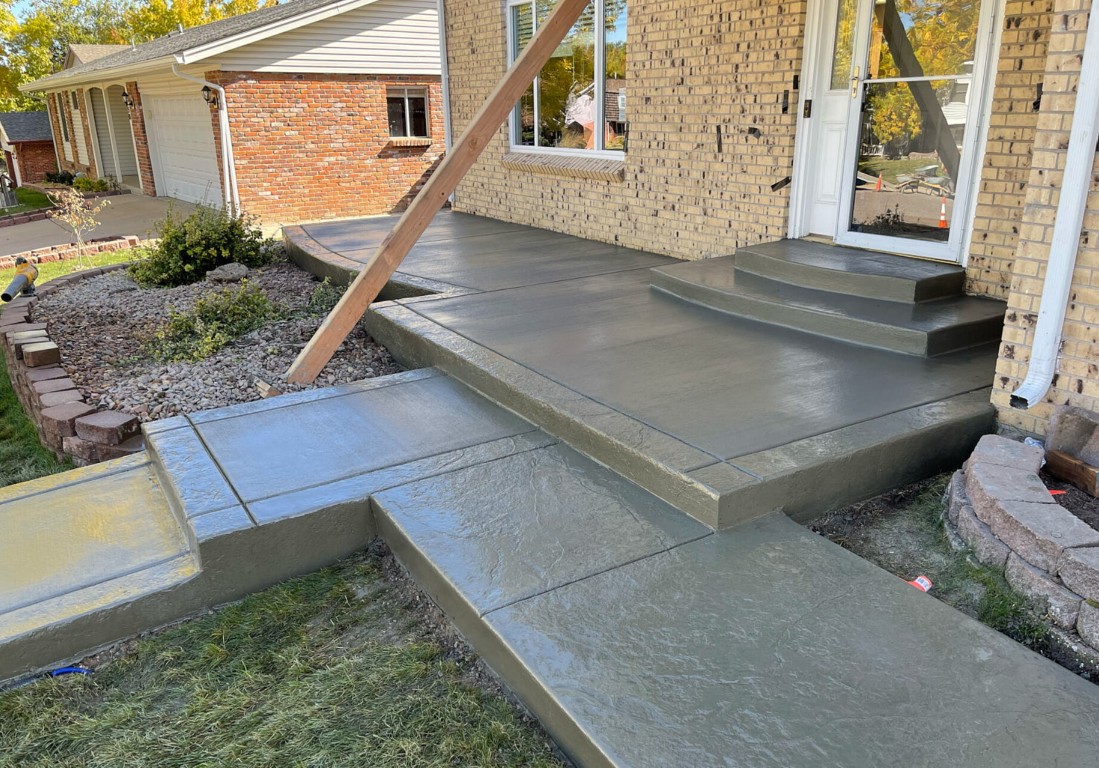
The Importance of Quality Walkways
Sidewalks and walkways serve essential functions on your property. They create defined paths that direct foot traffic, protect your lawn from wear, and provide safe access in all weather conditions. A well-designed concrete walkway eliminates muddy paths, reduces the risk of slips and falls, and makes your property more accessible for everyone, including people with mobility challenges.
Quality matters because people use these surfaces every day. Uneven or cracked walkways create tripping hazards, especially for children and elderly visitors. Improperly sloped sidewalks collect water and ice, making them dangerous in winter. Walkways that settle or shift can direct water toward your foundation instead of away from it. Getting the installation right the first time prevents these problems and ensures your walkways serve their purpose safely for decades.
Concrete flatwork includes any horizontal concrete surface beyond driveways and patios. This covers sidewalks, walkways, paths, aprons, equipment pads, parking areas, and utility slabs. We install all types of concrete flatwork throughout Braintree, always focusing on proper base preparation, adequate thickness, and correct finishing techniques. Whether you need a simple path from your driveway to your front door or an elaborate network of walkways connecting different areas of your property, we have the expertise to do it right.
Design Considerations and Planning
Good walkway design balances function, safety, and appearance. Start by thinking about how people move through your property. Where do they naturally want to walk? Connecting your driveway to your front door is obvious, but consider other common paths too. Maybe you need access to a side entrance, the backyard, a shed, or a garden area. Well-placed walkways make your property more usable while preventing worn paths through your grass.
Width and Layout
Walkway width affects both function and appearance. A minimum of 36 inches works for basic access, allowing one person to walk comfortably or someone to push a wheelchair or stroller. For primary walkways like your front path, 48 inches or wider feels more welcoming and allows two people to walk side by side. Service paths to sheds or utility areas can be narrower since they see less traffic.
Curves and angles add visual interest but need to make sense functionally. People naturally walk in straight lines, so overly curved paths might get bypassed. Gentle curves work well for longer walkways, softening the appearance while still providing direct routes. Right angles and geometric layouts create formal, traditional looks. The best design depends on your home's style and your landscape features.
Slope and Drainage
Proper slope prevents water pooling and ice formation. We typically create a slope of about one-quarter inch per foot, enough to move water off the surface but not steep enough to notice when walking. The slope should direct water away from buildings and toward appropriate drainage areas. For longer walkways, we might create crown slopes where the center is slightly higher than the edges, allowing water to run off both sides.
Steps become necessary when the grade change is too steep for a sloped walkway. Generally, if the rise exceeds about 6 inches over a short distance, steps make more sense than a steep slope. We can integrate concrete steps into your walkway design, creating smooth transitions between different elevation levels. Handrails might be required by code for steps with certain height or length specifications.
Common Flatwork Applications
- Front walkways connecting driveways to entry doors and porches
- Garden paths winding through landscaping and connecting outdoor spaces
- Side yard access providing routes to backyards and service areas
- Parking pads creating additional parking without full driveway expansion
- Equipment pads for AC units, generators, pool equipment, and utilities
Installation Process and Specifications
Professional walkway installation follows the same basic principles as other concrete work, but the details matter. We start by marking out the exact path and width you want. This lets you visualize the walkway and make adjustments before we start digging. We take into account existing landscape features, underground utilities, and drainage patterns during this planning phase.
Excavation depth depends on your soil and the walkway's purpose. Residential walkways typically need 4 to 6 inches of excavation depth to accommodate a gravel base and the concrete itself. The base layer of compacted gravel or crushed stone provides stability and drainage. We compact this base thoroughly because settlement here causes the most common walkway problems. For areas with poor soil or heavy clay, we might increase the base depth or add geotextile fabric to prevent mixing between soil and gravel.
Concrete thickness for walkways is usually 4 inches, which provides adequate strength for foot traffic and light wheeled equipment like lawnmowers or wheelbarrows. Areas that might see vehicle traffic, like aprons where walkways connect to driveways, need 5 to 6 inches. We use wire mesh or fiber reinforcement to control cracking. Control joints get placed every 4 to 5 feet to create intentional weak points where the concrete can crack in straight lines rather than randomly.
Finishing creates the surface texture and appearance. A broom finish is standard for outdoor walkways because it provides slip resistance in wet conditions. Smooth finishes look sleek but can be dangerously slippery when wet. For decorative applications, we can use stamped patterns or exposed aggregate to create more distinctive appearances. Edges get hand-tooled to create rounded corners that resist chipping and look professionally finished.
Maintenance and Long-Term Care
Concrete walkways need minimal maintenance but benefit from periodic attention. Regular sweeping removes dirt and organic debris that can cause staining. A few times a year, wash your walkways with a garden hose or pressure washer. This removes ground-in dirt and prevents buildup that makes surfaces slippery. Pay special attention to areas under trees where algae or moss might grow on the concrete.
Sealing protects concrete from water absorption, staining, and freeze-thaw damage. While not absolutely necessary for plain walkways, sealing extends their life and keeps them looking better. Apply a quality concrete sealer every two to three years. The sealer makes the surface slightly easier to clean and provides some protection against salt damage in winter. For decorative or colored walkways, sealing is more important to maintain appearance.
Winter care prevents damage and safety issues. Use calcium chloride or sand for ice control rather than rock salt, which can damage concrete surfaces. Shovel snow promptly to prevent ice buildup. Avoid using metal shovels or ice chippers directly on the concrete, as these can chip or scratch the surface. If you notice ice forming repeatedly in certain spots, that indicates a drainage problem that should be addressed.
Address problems early to prevent bigger issues. Fill small cracks as soon as you notice them to keep water from getting in and causing further damage. If you see settling or tilting sections, these need professional attention to determine the cause and implement proper repairs. Tree roots growing under walkways can cause significant heaving and cracking. Sometimes root barriers or strategic trimming can solve these issues without removing trees. Other times, rerouting the walkway around the root zone makes more sense than constantly fighting nature.
Frequently Asked Questions
Ready for New Walkways?
Get professional walkway and flatwork installation that improves your property's function and appearance. We'll design and build concrete paths perfectly suited to your needs.
Call (781) 794-7715