
Retaining Walls & Concrete Masonry
Control slopes, prevent erosion, and create usable space with professionally engineered retaining walls and masonry work.
Why Retaining Walls Matter
Retaining walls solve problems and create opportunities on sloped properties. They hold back soil to prevent erosion and sliding, create level areas where slopes once made land unusable, and protect foundations from soil pressure. If your property has significant grade changes, retaining walls can transform unusable slopes into functional outdoor spaces, gardens, or building sites.
Erosion causes serious problems for properties on slopes. Heavy rain washes soil downhill, undermining plants, creating ugly gullies, and potentially damaging structures below. Retaining walls stop this process by holding soil in place. They also manage water flow, directing runoff where you want it instead of letting it run wild across your property. Many homeowners in Braintree deal with sloped yards where proper retaining walls make the difference between a usable landscape and a muddy mess.
The structural aspects of retaining walls require engineering knowledge. These walls hold back tremendous weight and pressure from soil, especially when that soil gets saturated with water. Poorly designed or built walls fail, often catastrophically. Our experience with retaining wall design and construction ensures your wall provides the support you need while lasting for decades. We understand soil mechanics, drainage requirements, and the structural calculations that separate walls that work from walls that fail.
Types of Retaining Walls and Materials
Different retaining wall systems work better for different situations. Your choice depends on wall height, soil conditions, appearance preferences, and budget. Understanding your options helps you make the right decision for your property.
Poured Concrete Retaining Walls
Poured concrete creates the strongest, most permanent retaining walls. We build forms, install steel reinforcement, and pour concrete to create monolithic walls that can handle significant heights and loads. These walls work especially well for commercial applications, high walls, or situations requiring maximum strength. We can leave concrete walls plain, add surface treatments, or face them with stone or brick for better appearance.
Concrete Block Retaining Walls
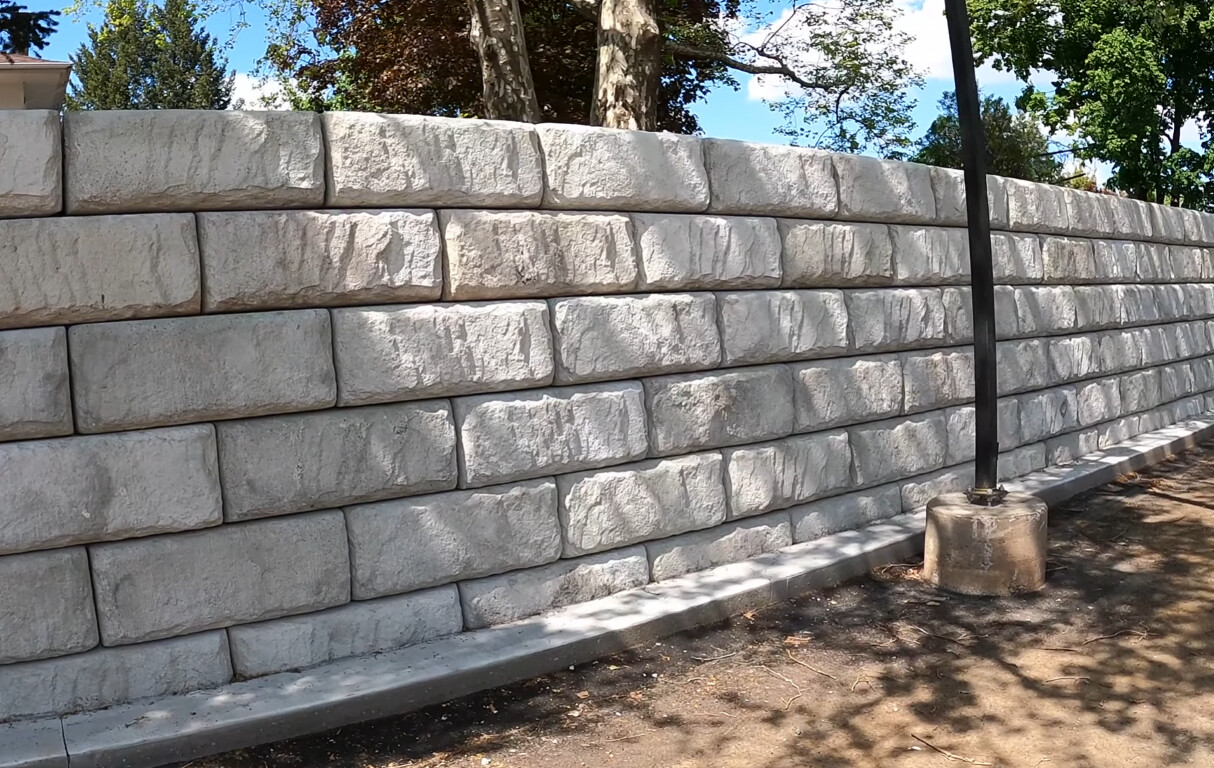
Concrete masonry units come in various styles designed specifically for retaining walls. Some interlock for easy installation, while others use pins or adhesive. These blocks often have textured faces that look like natural stone. Block walls cost less than poured concrete for moderate heights and offer good strength with faster installation. They work well for residential applications and create attractive finished walls without additional facing materials.
Segmental Block Systems
These modular systems use specially designed blocks that stack and interlock to create walls. Their engineering allows for curves and terraced designs that would be difficult with poured concrete. Many styles mimic the appearance of natural stone. These systems shine for residential landscaping projects where appearance matters as much as function. They also allow for easier future modifications if you want to expand or reconfigure your terraced areas.
Natural Stone and Veneer
For maximum aesthetic appeal, natural stone creates beautiful retaining walls with timeless character. We can build walls from fieldstone, cut stone, or manufactured stone veneer over concrete cores. Stone walls fit naturally into landscaping and add significant visual appeal. The trade-off is higher cost and longer installation times compared to concrete or block systems. For properties where appearance is paramount, stone delivers unmatched beauty.
Common Retaining Wall Applications
- Terraced gardens creating multiple level planting areas on slopes
- Driveway support walls preventing erosion along sloped driveways
- Foundation protection walls holding back soil near basements
- Patio and deck support creating level outdoor living spaces on slopes
- Erosion control along streams, drainage areas, or steep banks
Engineering and Installation Process
Building retaining walls that last requires understanding the forces at work and engineering appropriate solutions. The taller the wall and the wetter the soil, the more critical proper engineering becomes. We start every retaining wall project with site assessment. This includes analyzing your soil type, measuring slope angles, evaluating drainage, and determining how much soil the wall needs to retain.
Drainage is absolutely critical. Water adds tremendous weight and pressure behind retaining walls. Without proper drainage, even well-built walls eventually fail. We install drainage systems behind every retaining wall, typically using perforated pipes surrounded by gravel. This collects water and channels it away before pressure builds up. We also incorporate weep holes or drainage gaps that allow water to escape through the wall face when needed.
Foundation preparation sets the stage for wall stability. We excavate below frost depth and install compacted gravel bases that provide stable footing. For taller walls or poor soils, we might pour concrete footings that extend even deeper. The foundation must be level and solid because any settling causes the entire wall to fail. This preparation phase takes time but determines whether your wall lasts five years or fifty.
Wall construction follows engineering specifications for your specific situation. For concrete walls, this means proper formwork, adequate reinforcement, and correct concrete placement. For block systems, it means precise leveling, appropriate setback for stability, and proper connection between courses. We backfill carefully using proper materials, compacting in layers to avoid settlement. The finished wall gets topped appropriately and landscaping is restored around it.
Maintenance and Long-Term Performance
Retaining walls need less maintenance than many landscape features, but regular inspection helps catch problems early. Check your walls a couple times a year, especially after heavy rains or freeze-thaw cycles. Look for signs of movement like tilting, bulging, or separation between blocks. Cracks in concrete walls or displaced blocks in masonry walls indicate problems that need attention.
Keep drainage systems functioning properly. Make sure weep holes aren't clogged with dirt or plant material. Check that drainage pipes outlet freely and aren't buried or blocked. Clean out any debris that accumulates behind the wall. Good drainage prevents most retaining wall failures, so maintaining these systems protects your investment. If you notice water pooling behind or near your wall, address drainage issues immediately before they cause structural problems.
Watch for erosion at the top or bottom of your wall. Soil washing over the top indicates water isn't being managed properly above the wall. Erosion at the base undermines the foundation and threatens wall stability. Address these issues with proper grading, additional drainage, or concrete aprons that protect vulnerable areas. Plant roots can also affect walls, so keep large trees away from retaining structures or manage roots proactively.
Address problems promptly. Small issues like loose blocks or minor cracks can often be fixed easily. Waiting allows problems to worsen and potentially causes wall failure requiring complete reconstruction. If you notice significant movement, major cracks, or sections that appear unstable, get professional assessment immediately. Retaining wall failures can damage property below and create dangerous situations. We can evaluate your wall's condition and recommend repairs ranging from simple fixes to strategic reinforcement or partial rebuilding.
Frequently Asked Questions
Need a Retaining Wall?
Get expert retaining wall design and construction that solves your slope and erosion problems. We'll assess your site and recommend the best solution for your needs and budget.
Call (781) 794-7715